
As I stood by the stove, the rich aromas of sizzling beef and vibrant vegetables danced through my kitchen, instantly transporting me to the bustling streets of Seoul. Today, I’m sharing my take on the delightful Korean Beef Bibimbap Bowl—a dish that not only celebrates the art of balance but also offers incredible versatility. In just under an hour, you can whip up a meal that's perfect for the whole family and a guaranteed crowd-pleaser. With its quick prep time and ample opportunity for customization (hello, veggie options!), this recipe will become your go-to solution for busy weeknights. Are you ready to blend flavors and create your own rainbow of deliciousness? Let’s dive in!
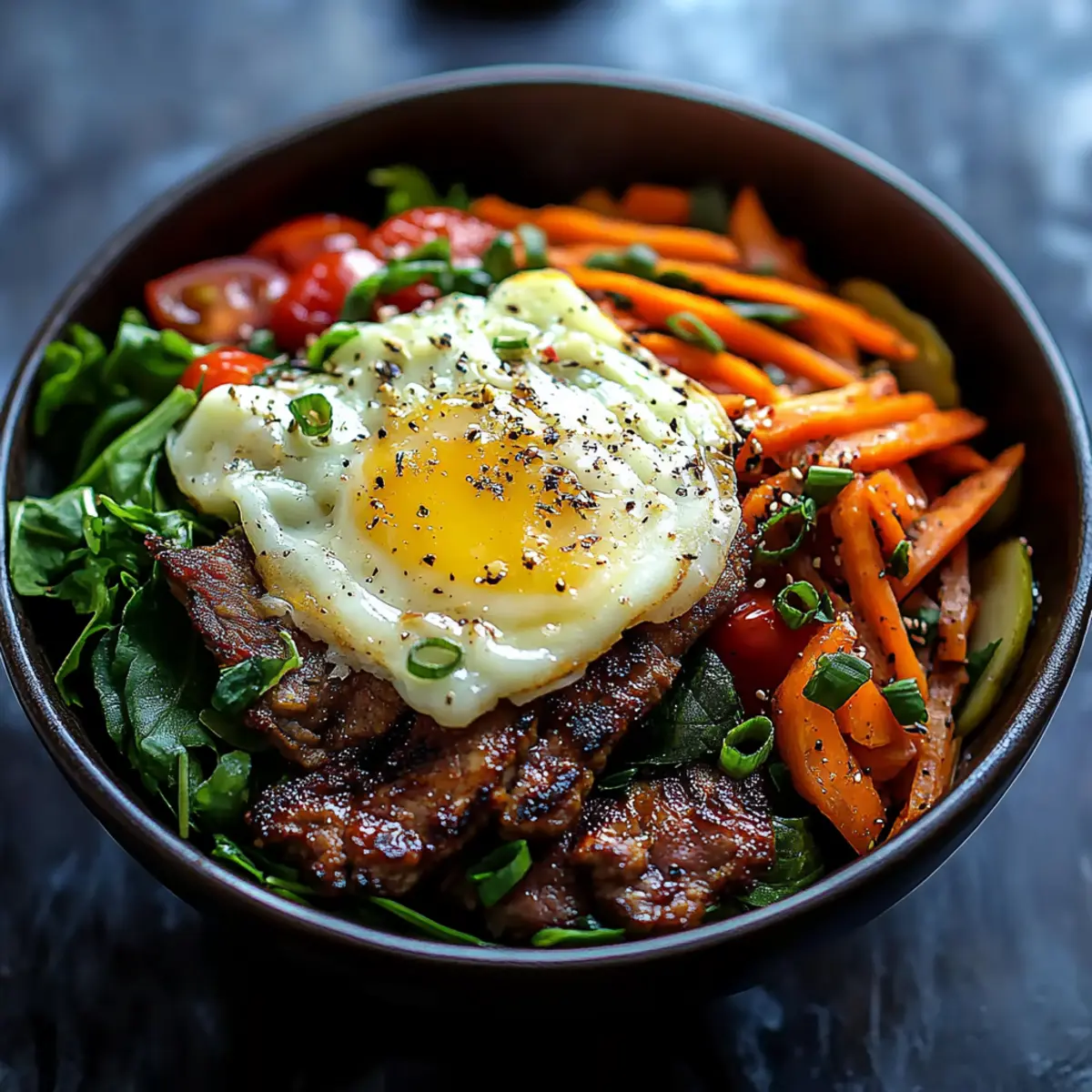
Why is Bibimbap the Ultimate Comfort Food?
Colorful, vibrant presentation: The Korean Beef Bibimbap Bowl is not only a feast for the taste buds but also a feast for the eyes, with vivid hues from fresh veggies.
Quick and simple: This recipe comes together in under an hour, making it an ideal choice for busy weeknights or when unexpected guests arrive.
Endless customization: Swap out beef for your favorite protein or add more veggies—this dish adapts beautifully to your preferences!
Savory and satisfying: Thanks to the unique blend of gochujang, sesame oil, and fresh ingredients, every bite bursts with flavor that will leave everyone craving more.
Family-friendly appeal: This vibrant bowl brings everyone to the table, encouraging shared meals and lively conversations!
Korean Beef Bibimbap Bowl Ingredients
Whether you're a seasoned chef or just starting out, these ingredients will make your Korean Beef Bibimbap Bowl an unforgettable meal!
For the Beef
• Lean ground beef – This provides a hearty base packed with protein for your bibimbap bowl.
• Gochujang sauce – Adds a spicy, savory kick; adjust the amount to suit your taste!
• Sesame oil – Infuses a rich, nutty flavor that elevates the whole dish.
• Low-sodium soy sauce – Keeps the saltiness in check while deepening the flavor profile.
For the Rice
• Cooked short-grain white rice – The perfect sticky base that holds all the vibrant ingredients together.
For the Vegetables
• Julienned carrots – Adds crunch and natural sweetness; feel free to use other colorful veggies like bell peppers.
• Fresh spinach – Packed with nutrients; you can swap it for kale or bok choy if desired.
• Sliced zucchini – Brings a lovely texture; try using yellow squash for a pop of color!
• Bean sprouts – These provide a delightful crunch and are a classic bibimbap element.
For the Toppings
• Eggs – Fry them sunny-side up to add richness; they beautifully blend into the dish when mixed together.
Step‑by‑Step Instructions for Korean Beef Bibimbap Bowl
Step 1: Prepare the Rice
Start by cooking 2 cups of short-grain white rice according to package instructions, using a rice cooker or stovetop. Once cooked, fluff the rice with a fork and keep it warm in a covered bowl. This sticky, tender rice will serve as the perfect base for your Korean Beef Bibimbap Bowl.
Step 2: Brown the Beef
In a large skillet over medium-high heat, add 1 lb of lean ground beef. Cook for about 5–7 minutes, breaking it apart with a spatula, until browned and cooked through. Drain any excess fat to keep your bibimbap bowl fresh and light. This step creates the flavorful heart of your dish!
Step 3: Flavor the Beef
Reduce the heat slightly and stir in 3 tablespoons of gochujang, 2 tablespoons of low-sodium soy sauce, and 1 tablespoon of sesame oil into the browned beef. Let it simmer for 5 minutes, allowing the rich flavors to meld together while keeping an eye on it so it doesn’t stick. Your Korean Beef Bibimbap Bowl is already gaining depth!
Step 4: Sauté the Vegetables
In a separate pan, heat a drizzle of oil over medium heat, then add 1 cup each of julienned carrots, sliced zucchini, fresh spinach, and bean sprouts. Sauté for about 5–7 minutes until the veggies are just tender and vibrant in color. This burst of freshness will beautifully complement the savory beef in your bibimbap bowl.
Step 5: Fry the Eggs
As your vegetables finish cooking, crack 4 eggs into the same skillet over medium heat and fry them sunny-side up for about 3–4 minutes. Keep a close eye on them, ensuring the yolks remain runny. The richness of the eggs will add an incredible creaminess to your finished Korean Beef Bibimbap Bowl.
Step 6: Assemble the Bowls
To assemble, place a generous scoop of warm rice in each bowl as the base. Top the rice with a portion of the seasoned beef, sautéed vegetables, and finish each bowl with a fried egg. This assembly showcases not only a fantastic blend of colors but also layers of delightful flavor in every bite.
Step 7: Serve and Enjoy!
Finally, serve your Korean Beef Bibimbap Bowl immediately, with extra gochujang on the side for those who enjoy a little more heat. Gather your loved ones around the table and watch as they delight in this satisfying, homemade meal!
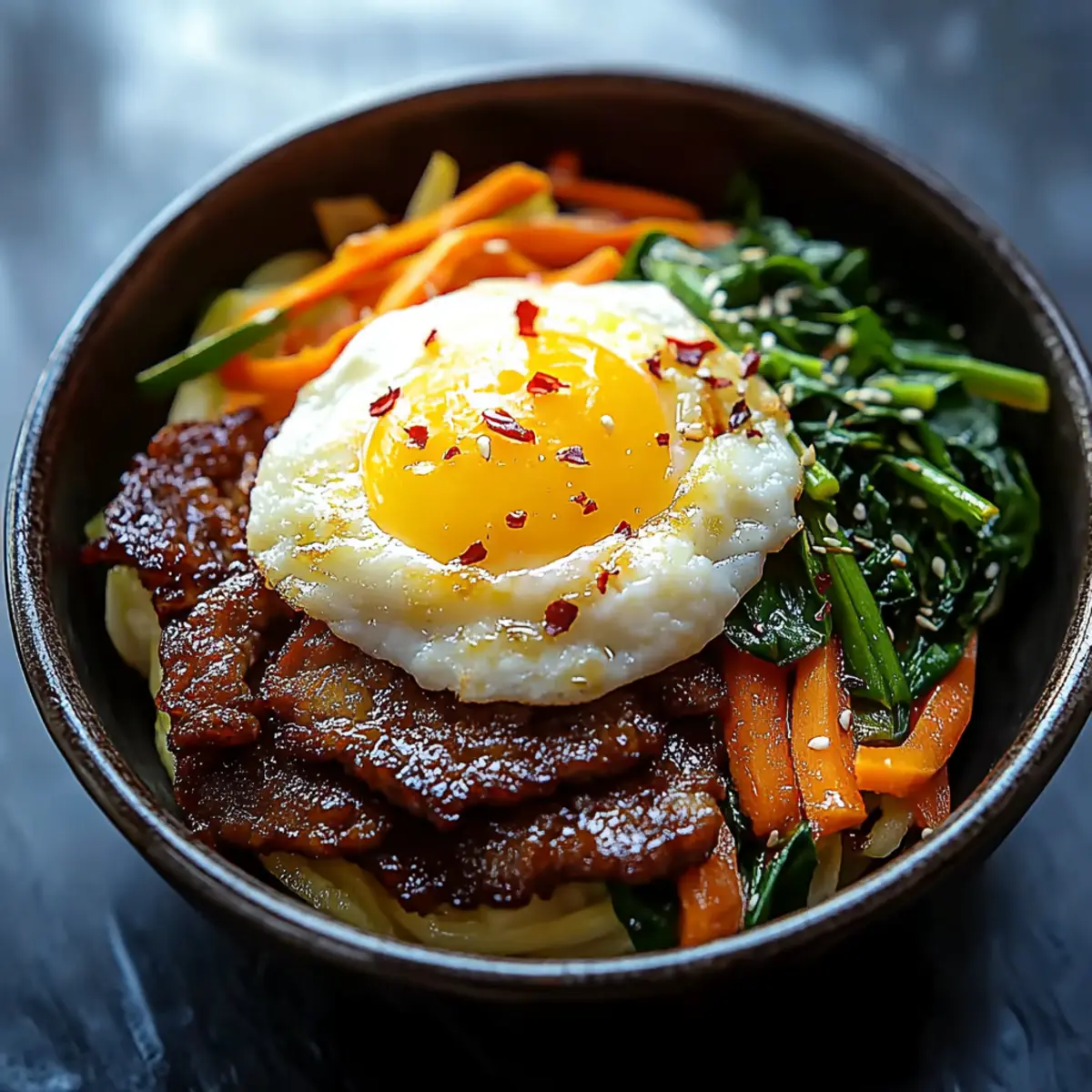
Korean Beef Bibimbap Bowl Variations
Feel free to unleash your creativity and customize this delicious Korean Beef Bibimbap Bowl to suit your tastes and dietary needs!
-
Vegetarian: Swap ground beef for sautéed tofu or mushrooms for a hearty, plant-based option. Both add a delightful umami flavor that pairs beautifully with the gochujang.
-
Spicy Twist: Add sliced jalapeños or a sprinkle of red pepper flakes to the beef for an extra kick. This will elevate the dish by catering to those who can’t resist a fiery flavor!
-
Rice Alternative: Try quinoa or cauliflower rice for a low-carb twist that still captures the essence of bibimbap. Both alternatives maintain texture while boosting nutrition.
-
Colorful Veggies: Mix in vibrant bell peppers or purple cabbage for added crunch and color. Not only will this enhance the dish visually, but they also provide an extra layer of taste that delights the palate!
-
Nutty Flavor: Drizzle with toasted sesame seeds or add a handful of roasted peanuts for a delightful crunch and an extra layer of nuttiness that complements the dish beautifully.
-
Assemble with Kimchi: Serve with a side of kimchi for that authentic Korean touch. The fermented flavors give your bibimbap bowl a tangy kick that is simply irresistible.
-
Egg Variations: Instead of frying, try poaching the eggs for a different texture, or use scrambled eggs for a simpler approach. Both options are delicious and lend their own unique charm to the bowl!
-
Herb Infusion: Incorporate fresh herbs like cilantro or green onions for a refreshing finish. Sprinkling them on top enhances both flavor and presentation!
Expert Tips for Korean Beef Bibimbap Bowl
-
Quality Beef: Use fresh, lean ground beef to enhance flavor. Avoid pre-packaged meats, as they may contain added fillers that can dull the delicious taste.
-
Customize Your Veggies: Feel free to substitute vegetables based on what you have on hand. If using frozen veggies, ensure they are thawed and drained; this prevents excess moisture in your Korean Beef Bibimbap Bowl.
-
Egg Perfection: For the best sunny-side up eggs, cover the skillet briefly while cooking. This helps cook the whites evenly without hardening the yolk, making each bite more delightful.
-
Rice Texture: Using short-grain rice offers the ideal sticky texture to hold everything together. Avoid long-grain rice, as it can be too dry for this dish.
-
Don’t Skip the Gochujang: This savory, spicy sauce is crucial for authentic taste. Adjust its amount to suit your spice tolerance, but don’t leave it out!
-
Assembly Matters: Layering is key; start with rice, followed by the beef and vegetables, and top with the egg. This presentation not only looks gorgeous but allows flavors to meld perfectly with every bite.
Make Ahead Options
These Korean Beef Bibimbap Bowls are perfect for meal prep enthusiasts! You can cook the ground beef and vegetables up to 3 days in advance, allowing your flavors to deepen while saving you time during busy weeknights. Simply prepare the beef by browning 1 lb of lean ground beef, then combine it with gochujang, soy sauce, and sesame oil, and refrigerate it. For the vegetables, sauté them and store them separately in an airtight container to maintain their freshness. When you're ready to serve, simply reheat the beef and veggies in a skillet while preparing the rice and frying the eggs. This ensures your meal is just as delicious, allowing you to enjoy restaurant-quality results with minimal effort!
What to Serve with Korean Beef Bibimbap Bowl
Creating the perfect meal goes beyond just the main dish—it's about complementing flavors and textures!
-
Crispy Korean Potato Wedges: These seasoned potato wedges add a satisfying crunch and heartiness that pairs delightfully with the bibimbap's fresh ingredients.
-
Kimchi: Bold and fermented, this traditional side adds a tangy punch and a kick of spice, enhancing the overall flavor experience.
-
Sesame Cucumber Salad: Cool and refreshing, this salad’s crunch contrasts beautifully with the warm, savory bibimbap, making each bite a textural delight.
-
Spicy Sautéed Greens: A quick sauté of bok choy or kale with garlic brings a vibrant color, flavor, and additional nutrition to your table.
-
Sweet Potato Rice: This unique twist infuses natural sweetness into your meal, balancing the savory flavors of the Korean Beef Bibimbap Bowl perfectly.
-
Mango Lassi: For a creamy, refreshing drink, a mango lassi brings a touch of sweetness that perfectly complements the spicy kick of the bibimbap.
-
Mochi Dessert: End your meal with sweet and chewy mochi. Its subtle sweetness rounds off the savory dishes beautifully and adds a fun texture!
-
Roasted Seaweed Snacks: Light and crispy, these are a great appetizer choice, offering a satisfying umami bite before you dive into the bibimbap bowl.
How to Store and Freeze Korean Beef Bibimbap Bowl
Fridge: Keep any leftover Korean Beef Bibimbap Bowl in an airtight container for up to 3 days. The rice and veggies may lose some texture, but the flavors will meld beautifully.
Freezer: Store the assembled bibimbap bowls in freezer-safe containers for up to 3 months. For best results, freeze the beef and vegetables separately from the rice, as it retains better texture.
Reheating: To reheat from the fridge, simply microwave for 1-2 minutes until heated through. For frozen bowls, it’s best to thaw overnight in the fridge before reheating to avoid uneven heating.
Fried Eggs: If you’ve added fried eggs, it’s best to prepare those fresh, as reheating can change their texture. Alternatively, scramble eggs for a quick and easy topping!
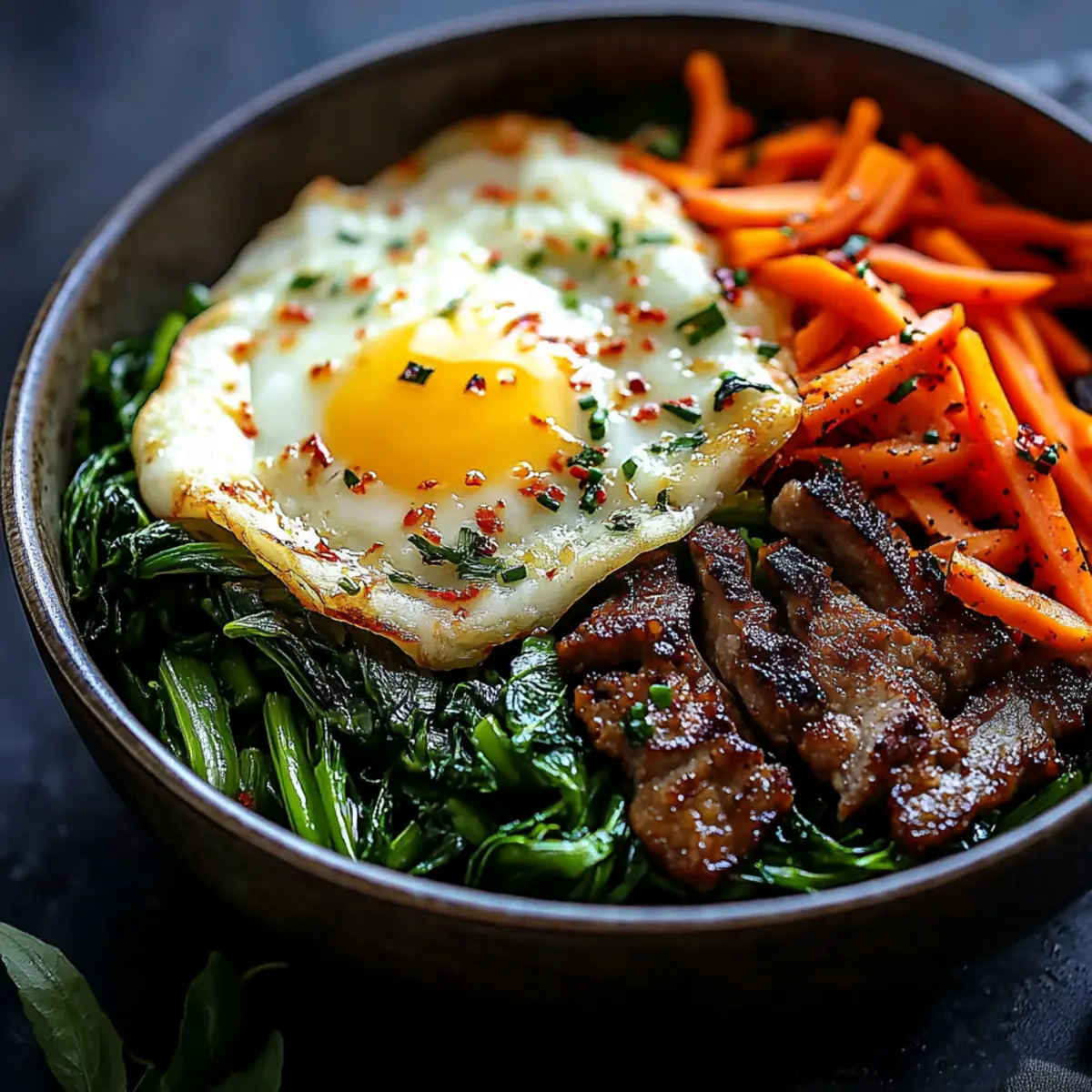
Korean Beef Bibimbap Bowl Recipe FAQs
What type of beef should I use for Korean Beef Bibimbap Bowl?
Absolutely! Using lean ground beef is ideal for this dish, as it provides a hearty base while keeping the flavors pronounced. You can also use ground turkey or chicken for a lighter option. If you prefer a vegetarian twist, tofu or mushrooms are fantastic substitutes that will absorb the bibimbap’s delightful seasonings well!
How do I store leftovers of the Korean Beef Bibimbap Bowl?
Very! Keep any leftover Korean Beef Bibimbap Bowl in an airtight container and refrigerate for up to 3 days. It’s important to store components separately if possible—the rice may become a bit sticky, but the meat and veggies will deepen in flavor, creating an even tastier meal!
Can I freeze Korean Beef Bibimbap Bowl?
Of course! To freeze, place the assembled bibimbap bowls in freezer-safe containers for up to 3 months. For best texture, store the beef and veggies separately from the rice. When ready to enjoy, thaw in the fridge overnight and reheat in the microwave until heated through, roughly 2-3 minutes.
What should I do if my rice gets too sticky or dry?
Ah, the texture of rice is crucial! If your rice is too sticky, ensure you’re using short-grain rice, as its starch content helps bind flavors. For dry rice, try adding a few spoonfuls of water and steaming it for a few minutes covered. If you prefer, preparing fresh rice each time helps achieve that perfect texture.
Is Korean Beef Bibimbap Bowl safe for pets?
I often recommend caution! This dish can be risky for pets due to the gochujang sauce and soy sauce which may contain ingredients harmful to them. Always check with your vet on what's safe for your furry family members and consider setting aside plain, unseasoned ingredients for them to enjoy if you want to share the love!
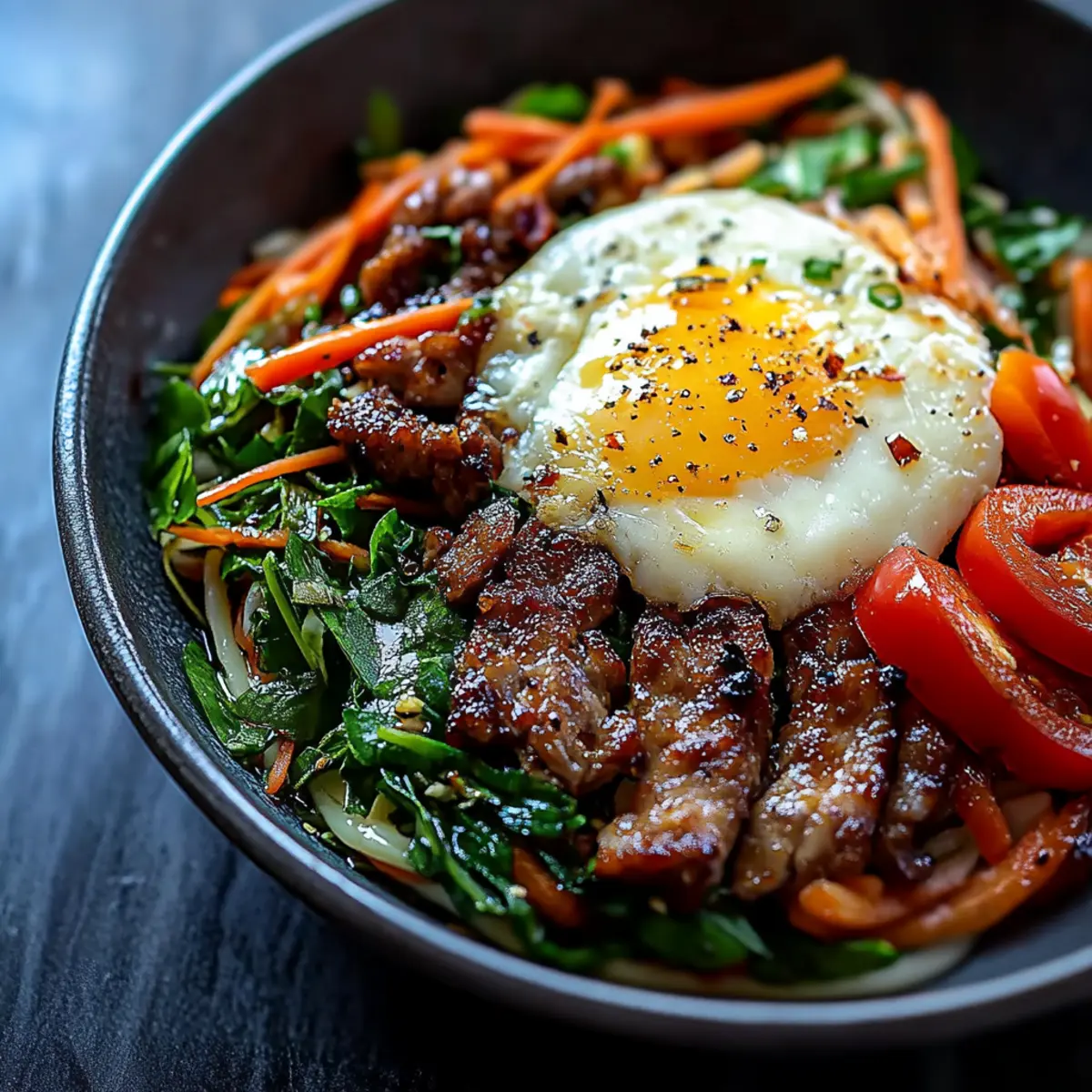
Irresistibly Flavorful Korean Beef Bibimbap Bowl at Home
Ingredients
Equipment
Method
- Cook 2 cups of short-grain white rice according to package instructions and keep warm.
- In a large skillet, brown 1 lb of lean ground beef over medium-high heat for 5-7 minutes.
- Stir in 3 tablespoon of gochujang, 2 tablespoon of low-sodium soy sauce, and 1 tablespoon of sesame oil. Simmer for 5 minutes.
- Sauté 1 cup each of julienned carrots, sliced zucchini, fresh spinach, and bean sprouts for 5-7 minutes until tender.
- Fry 4 eggs sunny-side up for 3-4 minutes, keeping yolks runny.
- Assemble bowls with rice, seasoned beef, sautéed vegetables, and a fried egg on top.
- Serve immediately with extra gochujang on the side.




Leave a Reply